

End Toddler Cup Refusal: Therapist Plan Using 16–24 oz Milk Limits

The fastest way to move a toddler past cup refusal is to cut back bottle access, offer milk only at meals, and try two or three cup styles until one clicks. Expect some tears the first few days. Most toddlers accept a cup within a few weeks when parents stay consistent, though a few need longer.
TL;DR:
Most toddlers accept a cup within a few weeks if parents stay consistent and reduce bottle access, offering milk only at meals.
A mismatch of cup style, such as using a valve trainer or an open cup, can significantly hinder progress during the transition.
Limiting milk intake to 16 to 24 ounces daily prevents overreliance on milk and encourages solid food and water consumption.
Persistent refusal beyond two months, coupled with poor weight gain or swallowing pain, should prompt a pediatrician or specialist evaluation.
Structured routines, patience, and trying straw or open cups gradually are key to overcoming cup refusal, often with professional guidance if needed.
Thrivingjoy
Support for Toddler Feeding Challenges
Thrivingjoy provides family-centered feeding therapy to identify root causes and tailor support for your child’s mealtime needs.
Table of Contents
Why Is My Toddler Refusing a Cup?
Cup refusal usually comes down to one of four things: habit, sensory preference, learned dependence, or an underlying medical issue. Sorting out which one you're dealing with saves you weeks of trial and error.
For most toddlers, the bottle isn't just about liquid. It's a comfort object tied to naptime, car rides, or being held, and that association is hard to break with logic alone. Other toddlers genuinely struggle with the mechanics: a cup demands a different tongue and lip pattern than sucking, and a spout or straw that feels unfamiliar in the mouth can trigger real resistance, not just stubbornness.
Comfort and habit: the bottle is linked to soothing routines—not just hunger or thirst.
Sensory and oral motor factors: flow rate, spout texture, or the shift from suck-swallow to sip-swallow feels foreign. Research on feeding behavior and oral motor development shows this skill gap is a real driver of refusal, not just preference.
Learned milk dependence: frequent bottles throughout the day reduce hunger for meals and reinforce the pattern.
Possible medical causes: teething pain, reflux, or a swallowing difficulty can make any new drinking method uncomfortable.
A Step-by-Step Plan for Overcoming Cup Refusal
Random attempts tend to backfire. A toddler who gets a cup one day and a bottle the next has no reason to change, so structure matters more than any single trick.
Set a short timeline. Pick a one to two week window and commit. Offer the bottle only at nap and bedtime for the first few days, then drop those too.
Make milk meal-only. Serve milk with breakfast, lunch, and dinner. Offer water at all other times, which also protects appetite between meals.
Try the milky-water method or a straw first. CHOP's gradual dilution approach eases the taste shift for toddlers moving off formula or breast milk. If taste isn't the issue, a straw cup sometimes bridges the gap better than an open cup, since sucking through a straw feels closer to bottle mechanics.
Remove the alternative. Once your child accepts one cup reasonably well, take the bottle out of sight entirely. Seeing it on the counter is often enough to reignite the protest.
Stay steady through the pushback. Praise small wins ("You took a sip!") instead of narrating the refusal, and resist the urge to grab the bottle the moment your toddler cries. Rescuing mid-tantrum teaches your child that protest works, which just prolongs the transition from bottle to cup.
Pro Tip: Keep a simple three-day log of what cup you offered, when, and how your toddler reacted. Patterns show up fast, and that log becomes useful information if you ever need to loop in a pediatrician or feeding therapist.
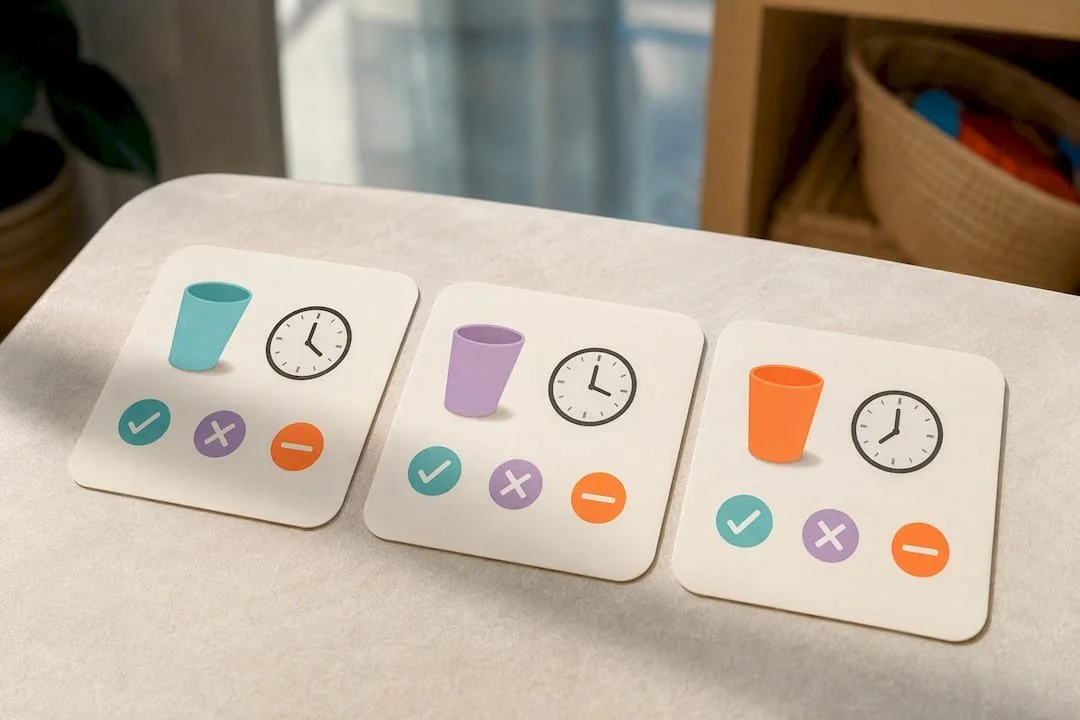
Which Cup Should You Try First?
Cup choice matters more than most parents expect. A mismatched cup can turn a manageable transition into a standoff.
Open cups build the strongest long-term oral motor skills but come with the most spills, so short supervised trials work best.
Straw cups often feel more familiar because the sucking action resembles bottle feeding, making them a good bridge for reluctant toddlers.
Trainer cups with valves can actually slow progress. A valve requires the same suction as a bottle nipple, so it doesn't push your toddler toward true sipping. Some therapists recommend removing the valve entirely so the child has to use tongue and jaw coordination instead of suction.
Trial two styles for a few days each, watching for excessive leaking, gagging, or frustration before switching. Skip juice or flavored drinks during trials. A sweet reward can undercut the whole point of the exercise.
How Much Milk Does a Toddler Actually Need?
After age 1, the American Academy of Pediatrics recommends keeping milk intake around 16 to 24 ounces per day, roughly 473 to 750 milliliters—see this practical primer on how toddler nutrition needs differ from other ages for details and guidance. That's a ceiling, not a target. Going well beyond it is one of the most common reasons toddlers refuse solid food and, ironically, resist a cup switch, since a belly full of milk leaves little appetite for anything else.
Milk in Context: A toddler drinking more than 24 ounces a day is often getting nearly a third of daily calories from milk alone, crowding out the iron, fiber, and variety solid foods provide.
If your toddler flatly refuses milk during the transition, that's rarely a nutrition emergency. Calcium and vitamin D can come from fortified foods and dairy alternatives like yogurt, cheese, and fortified plant milks.
Offer water between meals instead of juice or milk. Healthychildren points to water as the default between-meal drink for protecting both appetite and teeth.
A baseline of around 8 fluid ounces of water daily is a reasonable starting point, more on hot days or after active play.
Model drinking water yourself at the table. Toddlers copy what they see far more than what they're told.
What If the Cup Transition Stalls?
A short setback isn't a red flag. Illness, teething, or a new sibling can send a toddler back to old habits for a week or two, and simply resuming your routine once things settle usually gets you back on track.
Watch for signs that point to something beyond typical resistance:
Refusal lasting longer than two months despite a consistent, meal-only milk routine.
Poor weight gain or a noticeable drop on the growth chart.
Gagging, choking, or visible pain when swallowing from any cup.
Extreme distress that goes beyond ordinary toddler protest, especially around textures or specific cup types.
Start with your pediatrician. If refusal persists, a feeding therapist or speech-language pathologist can help, and research on feeding refusal supports evaluating persistent cases rather than waiting them out indefinitely. Bring a three to seven day log of cup types, volumes, and reactions. Video of a typical attempt helps a therapist spot oral motor patterns faster than a verbal description ever will.
A Feeding Therapist's Take on Cup Refusal
Most cup refusal isn't a discipline problem. It's a skill and comfort gap that resolves with the right sequence of steps, and families often just need someone to confirm they're not doing it wrong. Feeding therapy goals for cup refusal usually center on building oral motor coordination, easing milk dependence gradually instead of abruptly, and coaching parents on how to stay calm through the protest phase, since a parent's steadiness during pushback often predicts how fast things improve.
A typical pattern looks like this: a toddler tolerates a straw cup within days, moves to short open-cup trials over a couple of weeks, and drops the bottle entirely within a month once milk is restricted to mealtimes. Every child's timeline looks a little different, but the sequence rarely changes.
— Jamie
Ready for Hands-On Support With Cup Refusal?
If you've tried the meal-only milk routine, tested a couple of cup styles, and you're still stuck after a month, a professional evaluation saves you from guessing. Specialists can assist with this kind of stall, going beyond generic cup advice to identify whether the holdup is oral motor, sensory, or purely behavioral.
An initial feeding therapy consultation typically includes a full evaluation of your child's oral motor skills and feeding history, followed by an individualized plan and direct coaching so you know exactly what to do at home between sessions. This approach fits families who've already tried the basics and want a clear answer instead of another round of trial and error. If bottle dependence started even earlier, strategies for bottle feeding struggles can fill in the gap before the cup transition even begins. To get started, book a feeding therapy consultation and bring whatever notes or video you've already gathered.
Sources
Making the switch to cow's milk for 1-year-olds - Children's Hospital of Philadelphia (CHOP)
PubMed: relevant study on feeding behaviors and oral motor development
PubMed: clinical guidance on feeding refusal and when to seek evaluation
FAQ
What age should a toddler drink from a cup?
The American Academy of Pediatrics recommends introducing cups between 6 and 9 months.
Is it normal for a toddler to suddenly reject a parent, like their dad?
Yes, sudden preference shifts toward one parent are a common developmental phase, often tied to separation anxiety or a temporary attachment surge, and it typically passes within weeks without intervention.
How long should a 2-year-old be away from their mother?
There's no universal rule, since tolerance for separation varies by child and depends heavily on routine and reassurance rather than a fixed number of hours or days.
What are the signs of separation anxiety in a toddler?
Clinginess, crying at drop-off, trouble sleeping alone, and resistance to new caregivers are typical signs, and these often overlap with periods of feeding or cup resistance since both reflect a toddler's need for predictability.
When should I worry about my toddler's cup refusal?
Contact your pediatrician if refusal persists beyond two months despite a consistent meal-only milk routine, or sooner if you notice poor weight gain, gagging, or pain with swallowing.