

Cluster Feeding Newborn: What It Is and How to Cope

Cluster feeding is when your newborn wants several short feeds bunched close together over a few hours, instead of the usual spacing of two to four hours between feeds. It's one of the most common newborn feeding patterns, and in the vast majority of cases, it's completely normal. It usually shows up during growth spurts or evening fussy stretches, and it tends to pass within a few days.
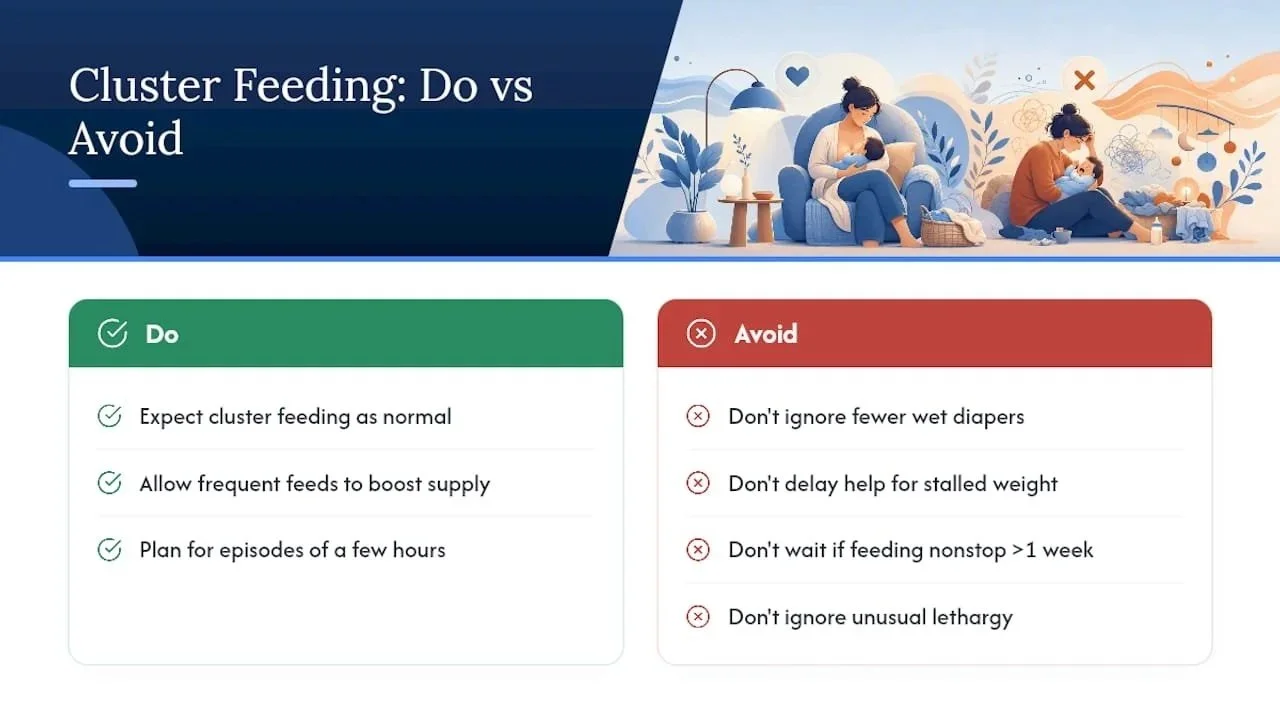
You do not need to panic if your baby suddenly wants to eat very frequently for an evening. That said, a few signs mean it's time to call your pediatrician or an IBCLC:
Fewer than the usual number of wet or dirty diapers for your baby's age
No weight gain, or a downward trend at checkups
Your baby wants to feed nonstop, around the clock, for more than a week straight
Signs of dehydration, like a sunken soft spot or very dark urine
Obvious pain, clicking, or difficulty latching during feeds
If you see any of these, have your diaper counts, last known weight, and a rough feeding timeline ready when you call. That information helps your provider sort out normal cluster feeding from something that needs closer attention.
Key Takeaways
Cluster feeding is a normal, temporary newborn feeding pattern driven mostly by growth spurts and comfort needs, and it resolves within about a week in most cases.
PointDetailsNormal, not a supply problemFrequent short feeds usually signal a growth spurt or comfort need, not low milk supply.Watch diapers and weight togetherSteady weight gain plus regular wet and dirty diapers confirm adequate intake.Know the red flagsStalled weight, low diaper output, or nonstop feeding past a week warrants a pediatrician call.Prepare, don't just endurePre-made meals, a set feeding station, and partner support make cluster stretches manageable.Get support when neededThrivingjoy's lactation counseling and feeding therapy help when latch pain, supply worries, or stalled weight go beyond typical cluster feeding.
Table of Contents
What Does Cluster Feeding Actually Look Like?
Picture your baby feeding well, seeming satisfied, and then wanting to eat again 45 minutes later. That cycle repeats several times over a few hours, often followed by a longer stretch of sleep. This is the hallmark of cluster feeding: frequent short feeds clustered together, rather than the more predictable rhythm you might expect.
A typical evening might run like this: your baby feeds at 5:00 PM, fusses and wants to feed again at 5:45, dozes for 20 minutes, feeds again at 6:30, and repeats this pattern until around 9:00 PM, when a longer sleep stretch finally arrives. Between feeds, your baby may seem fussy, root around, or suck on their hands. This is different from constant, inconsolable crying or a baby who can't latch at all. Those situations point to something else, like reflux, illness, or a latch problem, and deserve a separate look.
Common features of a cluster-feeding stretch:
Feeds very frequently for a few hours straight
Short, contented pauses between feeds rather than long stretches of calm
Fussiness that eases almost immediately once feeding starts
A longer sleep period once the cluster ends
Why Do Babies Cluster Feed?
Cluster feeding usually comes down to one of a few overlapping reasons, and figuring out which one applies to your baby can ease a lot of worry.
Growth spurts. Your baby's calorie needs jump quickly during growth windows, and frequent nursing sends a demand signal that tells your body to increase milk production to match.
Comfort and sucking needs. Newborns suck for reasons beyond hunger. It regulates their nervous system and helps them settle.
Small stomach capacity. A newborn's stomach holds only a small volume, so frequent refueling is simply how their body works in the early weeks.
Evening milk composition and fussiness. Many babies cluster feed most intensely in the evening, a pattern tied to natural fussy periods and shifts in milk composition throughout the day.
Developmental leaps. Periods of rapid brain and motor development can trigger extra feeding, similar to growth spurts.
Pro Tip: If the cluster feeding lines up with your baby hitting roughly 2 to 3 weeks, 6 weeks, 3 months, or 6 months old, a growth spurt is the most likely explanation. If it's happening every evening regardless of age or milestone, comfort-seeking is usually the bigger driver.
The physiology behind this is well established: frequent nursing raises prolactin and signals your body to produce more milk, which is exactly what your baby needs during a growth spurt.
How Long Does Cluster Feeding Last?
A single cluster-feeding episode typically runs a few hours in one day. The overall phase, meaning how many days in a row you'll see this behavior, usually lasts anywhere from a few days to about a week before your baby's feeding pattern eases back to a more predictable rhythm.
Growth spurts, and the cluster feeding that comes with them, tend to cluster (no pun intended) around a few common ages: roughly 2 to 3 weeks, 6 weeks, 3 months, and 6 months. Every baby runs on their own timeline, so don't be surprised if yours doesn't hit these windows exactly.
Here's a rough sense of what the first month can look like:
Week 1: Frequent feeding overall as milk supply establishes; less predictable pattern
Weeks 2 to 3: A cluster-feeding stretch often appears, tied to the first major growth spurt
Week 4: Feeding often settles into a slightly more spaced-out rhythm before the 6-week spurt approaches
If cluster feeding stretches into constant, all-day feeding beyond that first week or so, that's outside the typical pattern. Reach out to your pediatrician at that point rather than waiting it out.
How Can You Tell Your Baby Is Getting Enough?
The clearest way to know your baby is getting enough during a cluster-feeding stretch is to combine three signals rather than relying on any one alone: diaper output, weight trend, and how content your baby seems after longer feeds.
Wet diapers: Look for the number appropriate for your baby's age, generally building to six or more per day by the first week
Dirty diapers: Regular stools in the early weeks, with frequency easing somewhat as your baby matures
Weight gain: A steady upward trend on the growth chart at pediatric visits matters more than any single weigh-in
Contentment after feeds: Your baby settles, seems satisfied, and eventually falls into a longer sleep stretch
Return to baseline: Once the cluster-feeding phase passes, feeding spacing goes back to something more predictable
No single sign tells the whole story on its own. A baby having a slightly light diaper day but gaining weight steadily is usually fine. A baby with normal-looking diapers but a flat weight curve needs a closer look.
SignWhat It Tells YouWet diaper countReflects hydration and overall milk intakeWeight trend at checkupsThe most reliable long-term measure of adequate feedingContentment after feedsSuggests your baby is finishing feeds satisfied, not just snackingReturn to baseline patternConfirms the cluster-feeding phase has passed as expected
When Should You Call the Pediatrician?
Most cluster feeding resolves on its own, but a few patterns are red flags that warrant a call rather than a wait-and-see approach.
Fewer wet or dirty diapers than expected for your baby's age
Weight that's stalled or dropping at pediatric visits
A baby who seems unusually lethargic or hard to wake for feeds
Feeding that stays nonstop around the clock for more than a week
Visible pain, clicking sounds, or a shallow latch during every feed
Signs of dehydration, such as a dry mouth or sunken soft spot
If you notice any of these, here's how to move forward:
Call your pediatrician first if you're worried about weight or overall health.
Contact an IBCLC if the concern centers on latch, pain, or milk transfer.
Have your numbers ready: diaper counts from the last 24 hours, your baby's most recent weight, and how long the intense feeding has been going on.
Reaching out early rarely hurts and often catches small feeding issues before they become bigger ones.
What Actually Helps During a Cluster-Feeding Stretch?
Practical preparation genuinely reduces the stress of cluster feeding and often makes the feeds themselves go more smoothly.
Set up before evening hits. Have water, snacks, and a meal ready so you're not scrambling mid-cluster.
Create a calm feeding spot. A comfortable chair, pillows for support, and everything you need within arm's reach.
Adjust your position for comfort. Side-lying or a laid-back nursing position can ease strain during marathon feeding stretches.
Use paced bottle feeding if you're bottle-feeding, to mimic natural feeding rhythm and avoid overfeeding.
Hand express or pump briefly if you feel engorged between feeds, following techniques that support comfortable milk flow.
Try skin-to-skin contact between feeds to soothe your baby and support your milk-ejection reflex.
Babywear during lulls so you can eat, rest, or handle small tasks with your hands more free.
Quick fatigue-savers worth setting up in advance: pre-made freezer meals, a "feeding station" on the couch with snacks and your phone charger, and a clear plan with your partner for who handles what during long evenings. Following your baby's cues rather than the clock is usually more effective than trying to enforce a strict newborn feeding schedule during these stretches.
Pro Tip: Switch breasts or reposition slightly when feeding slows down mid-cluster. That extra stimulation often triggers another let-down and keeps your baby actively transferring milk instead of just comfort-sucking on an emptying breast.

Above all, protect your own basic needs. Drink water within reach, keep calorie-dense snacks nearby, and let someone else handle dishes or a diaper change so you can rest the moment your baby settles.
When Should You See a Lactation Consultant or Feeding Therapist?
An IBCLC or feeding therapist does more than reassure you. They assess latch quality, evaluate whether your supply matches your baby's needs, help troubleshoot positioning, and can identify oral-motor issues like tongue-tie that go beyond typical cluster feeding.
Consider booking an assessment if weight gain has stalled, if feeding is consistently painful, if you suspect a latch problem, or if the intense feeding stretches well past the usual week-long window. A good assessment typically starts with a feeding observation, followed by a personalized plan you can act on right away.
Bring what you have: a rough feeding log, diaper counts from the past day or two, and any weight numbers from recent checkups. That information turns a general concern into a targeted plan.
A Clinician's Perspective on Cluster Feeding
Cluster feeding is one of the most normal, most exhausting parts of the newborn stage, and both of those things can be true at once. Parents often worry something is wrong simply because it feels relentless. What actually matters is watching the signs that count, diapers, weight, contentment, and reaching out the moment something feels off rather than waiting it out alone.
How Thrivingjoy Supports Feeding and Lactation Concerns
If cluster feeding has you second-guessing your supply, your baby's latch, or just your own instincts, Thrivingjoy offers lactation counseling and feeding therapy built around exactly these questions, with sessions that go deeper than a quick phone consult can.

A first appointment typically starts with a full feeding assessment, whether that's a latch check, a weighted feed, or an oral-motor evaluation, followed by a plan tailored to your baby rather than a generic handout. Families can also book prenatal lactation consultations before delivery to walk in with a plan already in place. Thrivingjoy accepts private pay and major insurance plans, with scholarship options available for families who need them. If you're in the Tampa area and want a real answer instead of another late-night search, book a lactation counseling session and get a plan built around your baby's actual feeding pattern.
Frequently Asked Questions
Is cluster feeding normal for newborns? Yes. Cluster feeding is one of the most common newborn feeding patterns and typically signals a growth spurt or a comfort-seeking phase rather than a problem.
How long does cluster feeding last? A single episode usually lasts a few hours, and the overall phase tends to run a few days to about a week before feeding settles back into a more predictable rhythm.
Does cluster feeding mean I don't have enough milk? Not usually. Frequent feeding is often your baby's way of signaling your body to increase supply, especially during growth spurts.
Why does cluster feeding happen mostly at night? Many babies cluster feed heaviest in the evening, a pattern tied to natural fussy periods and shifts in milk composition later in the day.
When should cluster feeding worry me? Contact your pediatrician or an IBCLC if diaper output drops, weight gain stalls, feeding stays nonstop for more than a week, or your baby seems unusually lethargic.
This article is general information, not a substitute for advice from a qualified doctor. Consult a qualified healthcare professional about your own circumstances before acting on anything here.